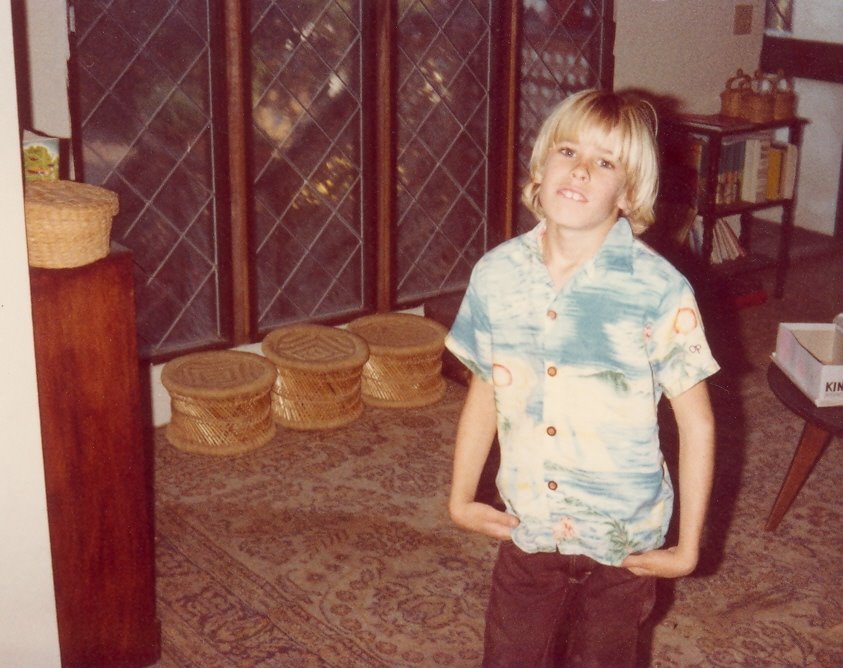
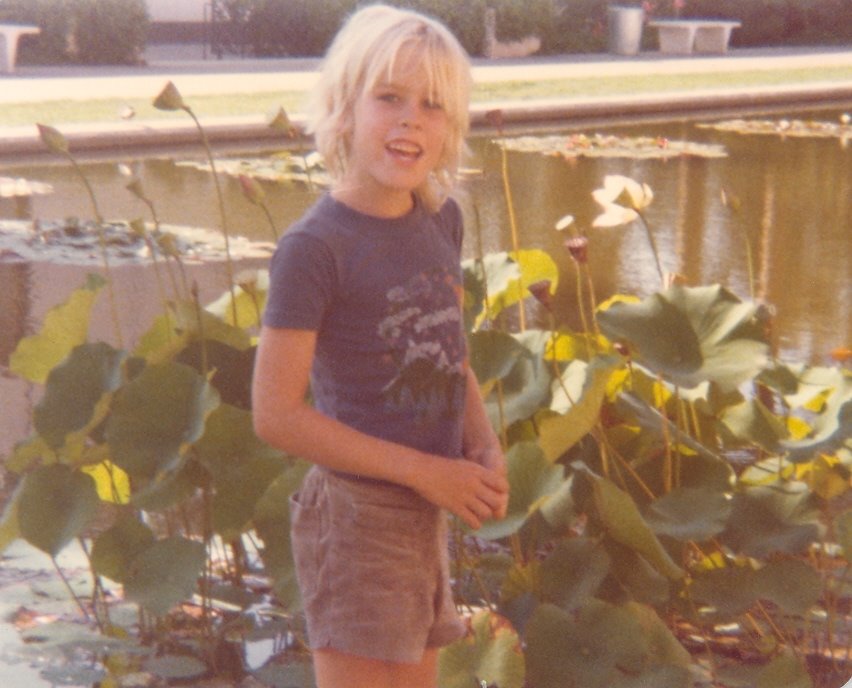
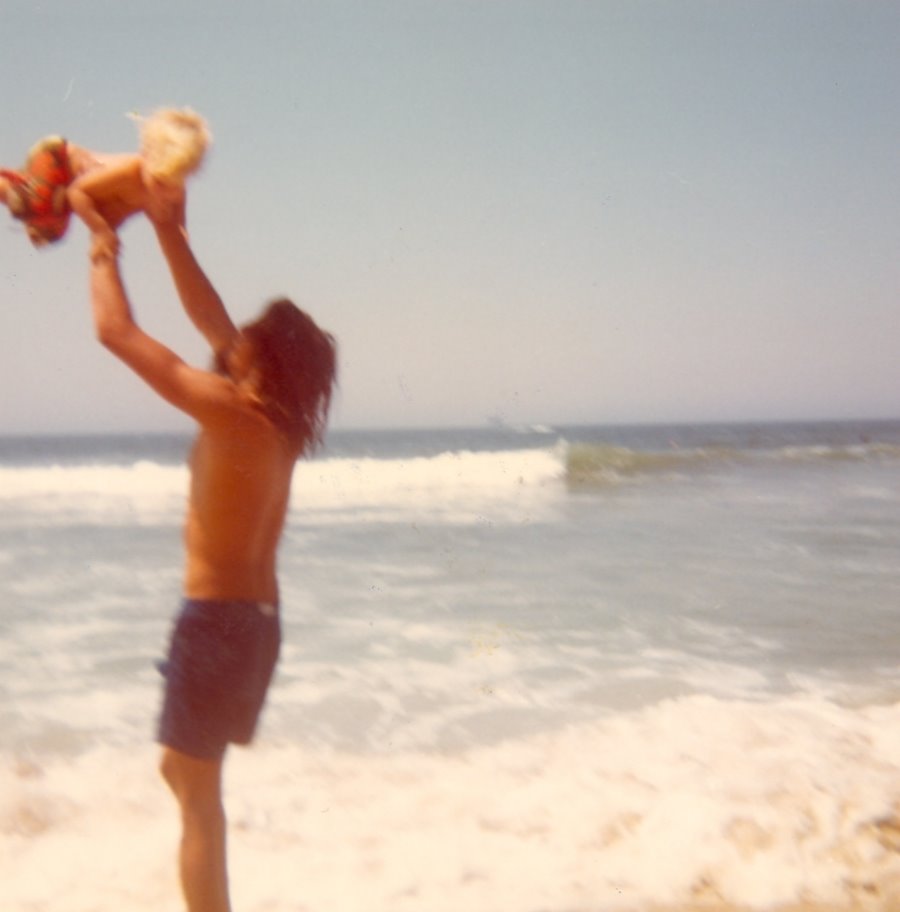

Here is the story, as told to me by my father, Robert Unsworth, of his time in Alaska in the winter of 1973-1974, working the oil fields. After the story, is a brief historical overview of that time period in Prudhoe Bay and the seismic surveys he participated in.
Heading to Alaska
In the late months of 1973, the coastal economy of Southern
California began to stall. For Robert Unsworth, a 22-year-old journeyman
carpenter with a newborn son, Jake, and a toddler, Noah, the lack of work was
more than a professional frustration—it was a threat to the future he was
building on a third-acre lot in Leucadia.
His mother-in-law, Marion DeVol, stepped in to bridge the
gap. She hired Robert at her business, the DeVol Pet Center in Santa Ana,
paying him his full journeyman’s wages to handle odd jobs. It was there, two
weeks into the work, that a friend walked through the doors with a wild
proposition: there was work to be had in Alaska.
Just before Christmas, Robert and his friend, Johno, left
the warmth of California for the frozen reality of Fairbanks. They arrived as a
team—Robert, the experienced Journeyman, and Johno, the Apprentice. When they
reached the local union hall, the dynamics of the era became clear. Because
Robert was Native American, the union offered him a position immediately.
However, they refused Johno because of his apprentice status. Robert didn’t
hesitate; he refused the job, telling the union he wouldn't work without his
partner.
While Johno’s family back in California scrambled to pull
strings and send up the Journeyman paperwork for him, the delay cost them. By
the time Johno was "official," the specific carpentry jobs—building
the massive wooden forms for the pipeline’s concrete supports—had been filled.
The two men found themselves in a Fairbanks basement,
renting cots alongside a dozen other workers. Seeking a new path, they applied
for positions with Geophysical Service Inc. (GSI), which was conducting seismic
surveys across the Prudhoe Bay. On the way to their interview, they caught a
ride with a local man named Bud. When Bud realized he had two skilled
carpenters in his car, he made a trade: if they would insulate and drywall two
small houses he owned, he would provide them with room and board at his home while
they waited for the GSI call.
Robert and Johno moved out of the basement that same day. They
attacked the first house with such speed that they finished it in twenty-four
hours. Bud, stunned by the quality and pace, laughed and asked, "What
am I going to do with you guys?" When winter frost made digging
foundations for a local bank impossible, Robert had an idea. He had Bud set up
canvas tents over the frozen earth and blasted the ground with diesel space
heaters until the soil softened. Bud was so impressed he began paying them money
on top of their room and board. They stayed with him for a month, though GSI
called within two weeks to offer them the job. The company was so eager to get
them to the North Slope that they put both men on the payroll immediately, two
weeks before they even stepped foot in Prudhoe Bay.
A North Slope Education
Before flying north to Deadhorse, Bud took Robert to a local
supply store to buy the heavy-duty overalls required for survival in Prudhoe
Bay. They were the uniform of a new world, one where the first day on the job
involved a "Prudhoe initiation." Robert and Johno were sent out to
the airfield to light smudge pots with matches to guide in a cargo plane. After
several minutes of struggling with freezing fingers and failing matches, the
veteran crew finally revealed the propane torches actually used for the task.
The true baptism, however, came when the cargo plane landed.
As the crew began offloading diesel fuel, a transfer hose was handed to Robert;
it leaked, drenching the chest and legs of his overalls in a gallon of fuel.
For the next four months, the scent of diesel became his second skin.
Robert began his time with Geophysical Service Inc. (GSI) as
a "Juggie," placing geophones into auger holes along survey
lines—marked with red flags for inland and blue for the shore. When a driller’s
helper departed for Canada, Robert seized the opportunity. He moved from
geophones to the rig, eventually becoming a driller himself, responsible for
boring the holes and setting dynamite along the blue-flagged shoreline.
The work was dangerous and precise, but human error was
always a factor. One day, a surveyor mislaid the blue flags inland. Because the
technique for shoreline drilling differed from the tundra, the auger repeatedly
seized in the frozen earth. As the crew used a torch to thaw the equipment,
they struck a gas pocket. The back of the rig ignited instantly. Knowing the
truck was loaded with dynamite, Robert and the crew fled into the deep snow,
fearing an imminent explosion. They had not run far when a sudden, powerful
arctic wind swept across the plains, miraculously blowing out the flames before
the fire could reach the blasting caps.
Though a "Shooter" offered to train him inside the
warm, computer-filled "Doghouse" van to record seismic readings,
Robert declined. He was a man of the outdoors and preferred the physical rhythm
of the rig to the confusion of the special instruments.
His favorite memory of the north, however, was one of
profound silence. While driving a rig to a civilian weather station to fill up
the water tank, the Northern Lights erupted with such intensity that he turned
off the engine and stood in the vast, dark quiet for thirty minutes, watching
the sky. When he finally arrived, the station operator greeted him with a
knowing smile. "What took you so long?" the man asked, but he guessed
before Robert could answer, “Watching the lights?". He told Robert to tell
his supervisor the pump had malfunctioned—a small gift of time between men working
at the edge of the world.
The Return to California
In early 1974, as the ice began to melt and the drilling
rigs were pulled off the softening tundra, a call came from a family friend.
Robert was told he needed to come home. He and his wife separated shortly after
his return; at 22, the pressures of the era had taken their toll.
Robert took his two young sons, Noah and Jake, and moved
south to the 1/3 acre lot on Jasper Street in Leucadia he had purchased two years earlier with his one-time payment from the 1972 Judgment Fund Roll of California Indians. For years, the three of
them lived in a fifth-wheel trailer parked in the driveway, beside a
freestanding garage Robert had built himself.
Between carpentry jobs and raising his boys as a single
father, Robert chipped away at the Tudor-style house he was building on the
property. The stucco, the dark beams, and the leaded glass windows were
installed piece by piece over the following years. Finally, in 1980, when Noah
was ten years old, the trailer was traded for the house.
The winter of 1973–1974 was arguably the most pivotal moment
in the history of the North Slope. Robert arrived at Prudhoe Bay
just as the "Oil Rush" shifted from a crawl to a frantic sprint.
Here is the historical context of what he experienced during
those four months and how his work for GSI (Geophysical Service Inc.)
fit into the birth of the Trans-Alaska Pipeline.
1. The Global Catalyst: The 1973 Energy Crisis
When Robert left for Alaska in December 1973, the world
was in the grip of the Arab Oil Embargo. Gasoline prices in the Lower 48
had quadrupled, and there were massive shortages.
2. GSI: The "High-Tech" Pioneers of the Tundra
Geophysical Service Inc. (GSI) was not just any
contractor; they were the world leader in seismic technology (founded by the
same men who started Texas Instruments). Their job was to
"see" into the earth to find the edges of the oil reservoir.
3. The Drilling Job: Danger and Hierarchy
Robert's progression from "Juggie" (placing
geophones) to Driller was a significant step up in responsibility.
4. Life at Deadhorse and the Weather Station
In 1973, Deadhorse wasn't a town; it was a collection
of modular "camps" made of shipping containers and trailers.
5. The Surrounding Years: Before and After
During the 1973–1974 seismic surveys in Prudhoe Bay, the Auger
Rig was the workhorse of the North Slope. Because the goal of Geophysical
Service Inc. (GSI) was to map the subsurface using shockwaves, these rigs
had to be fast, mobile, and capable of drilling through some of the hardest
frozen material on Earth.
Here is the technical breakdown of how Robert’s rig
operated and how the "shot holes" were prepared.
1. The Rig: A Mobile Drill Platform
On the North Slope, the rigs were typically mounted on Rolligons
(trucks with massive, ultra-low-pressure tires) or tracked vehicles to prevent
the heavy equipment from breaking through the delicate tundra.
2. The Drilling Process: Inland vs. Shoreline
Robert’s story about the wrong flags highlights the two
very different environments they worked in:
3. Placing the Charge (The "Load")
Once Robert reached the target depth (usually 50 to 100
feet), the auger was pulled out, leaving a clean "shot hole."
4. The "Blow" and the Reading
Once the hole was loaded and the rig moved a safe distance
away, the Shooter in the van took over.
The Gas Pocket Risk
The "gas pocket" Robert hit occurs because as
the auger grinds through the permafrost, it can pierce a small, pressurized
pocket of biogenic methane (gas formed by ancient decaying plants
trapped in the ice).

